The end of the year and the beginning of a new one are a good opportunity to mark a milestone in the passage of time. One such milestone is carrying out a “census” of our animals. In practice, records of our animals are kept continuously and updated daily, so it is always possible to know exactly how many animals of each kind we have. This is important not only for animal management but also because these numbers determine the quantities needed by our specialists responsible for sourcing and preparing animal feed.
Alongside this ongoing record-keeping, the Zoo’s Collections Directorate compiles monthly summaries of current animal numbers. We are now publishing the data recorded at the turn of 2025–2026. According to these figures, the Zoo houses 7,336 individual animals of 639 species, as well as 78 breeding groups. Mammals are represented by 840 individuals of 101 species, birds by 789 individuals of 105 species, reptiles by 370 individuals of 82 species, amphibians by 153 individuals of 21 species, fish by 4,570 individuals of 185 species, and invertebrates by 536 individuals of 145 species, along with 78 breeding groups. Breeding groups are typically counted in the case of insects and other invertebrates where it is not practical to count each individual animal.
In addition, a further 116 animals of 19 species live at the Margaret Island Petting Zoo operated by our institution. Altogether, this means we care for 7,452 animals representing 658 species, along with the 78 breeding groups mentioned above.
By international standards, this represents a particularly high number of species, and among Hungarian zoos, we display by far the greatest variety of animals. The main point, however, is not the numbers themselves but our long-standing aim to present as wide a cross-section of living diversity as possible, since biodiversity is one of the most important characteristics of life on Earth.
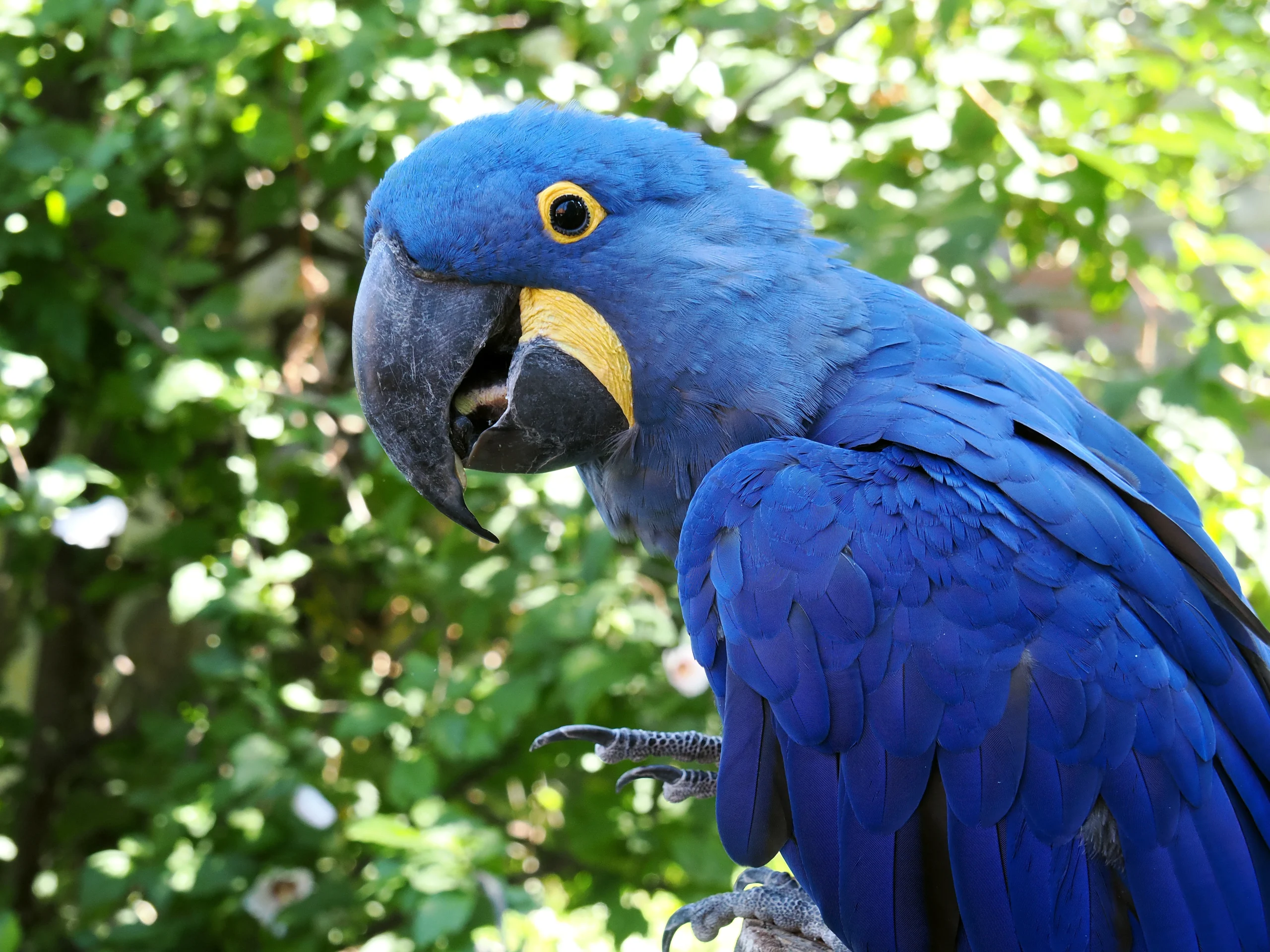
Among the animals kept at our Zoo are many species classified by the International Union for Conservation of Nature (IUCN) as Vulnerable (such as the takin, Nile hippopotamus, tapir, hyacinth macaw, or Aldabra giant tortoise), Endangered (such as the Asian elephant, ring-tailed lemur, golden-bellied mangabey, red panda, tiger, Persian leopard, Asiatic lion, dhole, giant otter, grey crowned crane, northern bald ibis, kea, or Komodo dragon), or Critically Endangered (such as the Cebu warty pig, gorilla, or Sumatran orangutan). The Mhorr gazelles seen in the Savanna Complex belong to the category Extinct in the Wild, as their natural populations disappeared completely by the 1960s and 1970s, although they have recently returned to the wild thanks to a reintroduction programme.
Beyond public display, the purpose of keeping declining species in zoos is to support their survival through captive breeding, especially in cases where wild populations have become very small or have disappeared altogether. We take this conservation role seriously, which is why we participate in international zoo breeding programmes for 138 threatened species.
As we celebrate the Zoo’s 160th anniversary this year and have declared a jubilee anniversary year, it is worth briefly recalling how animal records were kept in the past. Naturally, these were paper-based. Records of the animal collection have existed since the very beginning, although at first they mainly served accounting purposes. More detailed records relevant to breeding, known as internal studbooks, were introduced at the Zoo in the 1930s on the initiative of Csaba Anghi, then head of the Mammal Department and later Director General. At that time, such record-keeping was still uncommon in other zoos. Many early records were lost due to wartime destruction, but we know, for example, that 598 animals lived at the Zoo at its opening in 1866, and that by the end of the Siege of Budapest during the Second World War, only 23 animals had survived.