
We are taking part in a seven-year conservation programme to protect and increase the population of the European ground squirrel living in the Pannonian region.
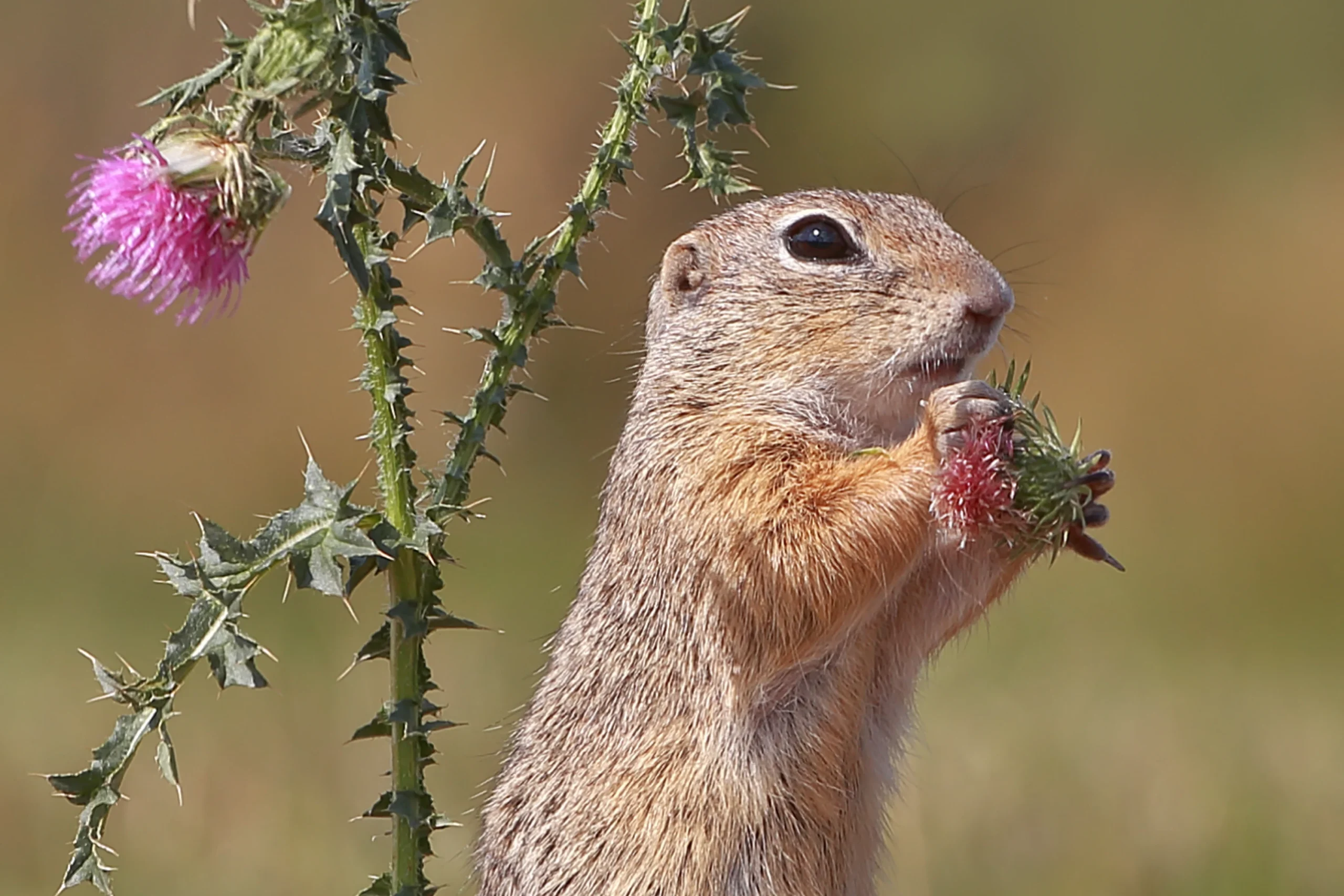
Many people may not know that a few years ago the European ground squirrel was also exhibited at the Budapest Zoo, and one of our aims is to have such a presentation again in the future. However, this is only a small part of the seven-year conservation programme that has just begun. As one of the 11 professional organisations working together to protect and increase the population of the European ground squirrel in the Pannonian region, we are contributing to the conservation of this small mammal, which is listed as a strictly protected species in Hungary and plays an important role in maintaining natural ecosystems. Veterinarians from the Budapest Zoo are also involved in this work. Another goal of the project is to help more people understand the real importance of ground squirrels in natural ecosystems, for example their role in maintaining soil quality and their place in the food chain as prey species for rare birds of prey such as the saker falcon and the eastern imperial eagle. The coordination of these communication tasks will be carried out by the Zoo Foundation.
Until the middle of the last century, the European ground squirrel was considered an agricultural pest and was even consumed as a traditional food. Due partly to uncontrolled eradication and largely to changes in land use, its numbers have declined drastically by today. To halt this negative trend, a seven-year LIFE programme, financed 75% by the European Union, was launched on 1 December 2025. The main beneficiary of the project is the Herman Ottó Institute Nonprofit Ltd. The implementation involves seven additional professional partners (Foundation for the Budapest Zoo, Budakeszi Wildlife Park, Bükk Mammalogical Research Group Association, Bükk National Park Directorate, HUN-REN Centre for Ecological Research, Hortobágy National Park Directorate, and the Romania-based MILVUS Nature Conservation Association), as well as three associated partners (University of Debrecen, Fertő–Hanság National Park Directorate, and Kiskunság National Park Directorate).
The programme, titled “Ensuring the Survival of a Viable European Ground Squirrel Population in the Pannonian Region” and abbreviated as CitellusLIFE, aims to secure the long-term survival of three distinct genetic lineages identified within the ground squirrel populations of the Pannonian region. By coordinating local conservation efforts, the project will establish a “conservation safety net” that, by maintaining viable populations in the region, may become one of the key safeguards for the species at a global level.
This “conservation safety net” ensures effective coordination of efforts. Its main elements include improving the condition of existing ground squirrel colonies, expanding their areas, connecting colonies, and establishing new ones. In addition to strong wild populations in the Pannonian region, outdoor breeding sites and indoor breeding centres will be used to increase numbers. The animals will then be reintroduced into carefully selected and prepared habitat patches. This approach will help create a strengthened ground squirrel population in the Pannonian region, whose status and conservation situation can be monitored continuously at colony level using a unified monitoring system. An essential part of protection is also improving the social acceptance of the ground squirrel and fostering a positive attitude among local communities.
The seven-year project, launched under the leadership of the Nature Conservation Directorate of the Herman Ottó Institute Nonprofit Ltd. with the participation of 11 professional organisations, is financed 75% by the European Union. Support for providing the required co-financing has been undertaken by the Ministry of Public Administration and Regional Development and the Ministry of Agriculture.