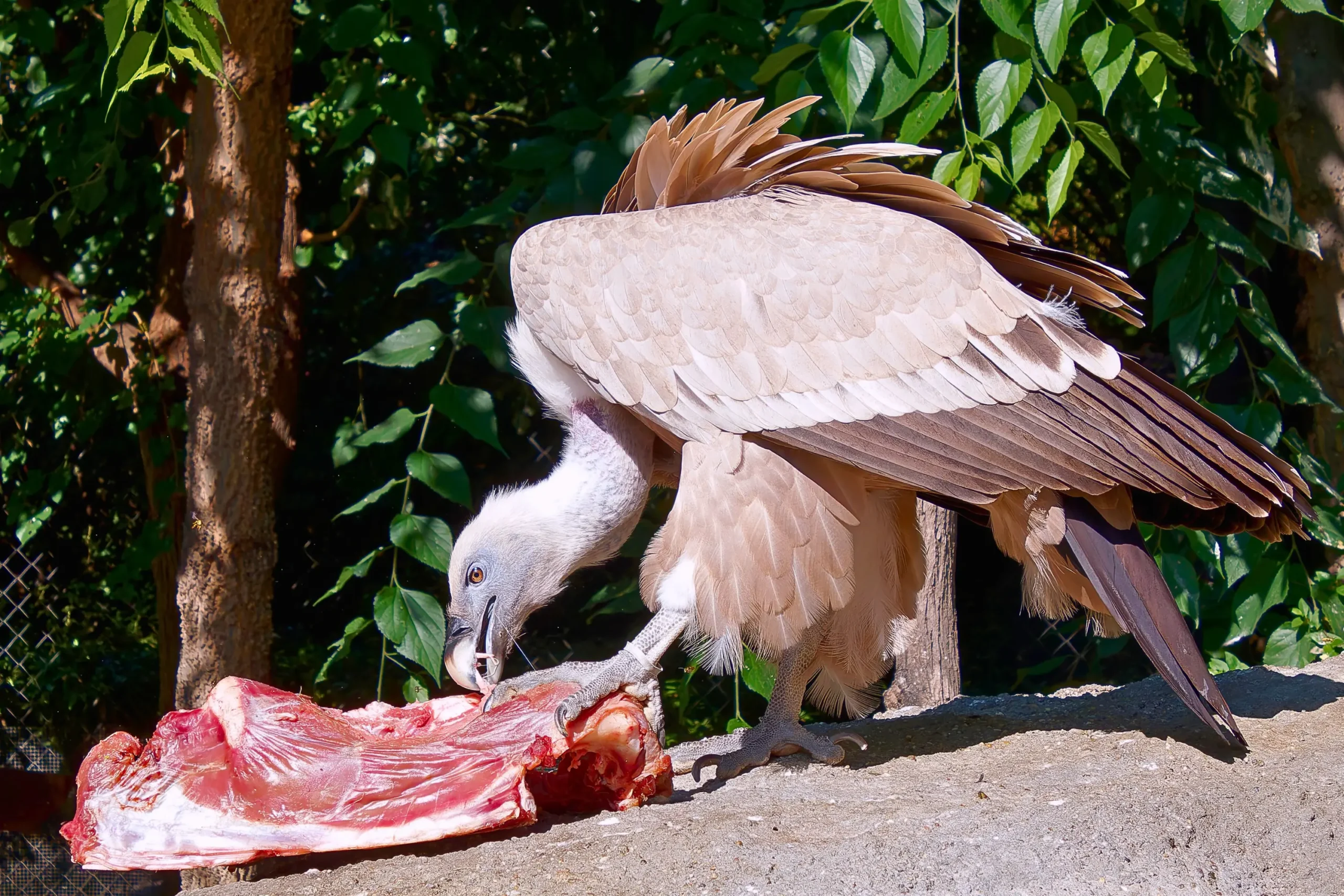
The vulture aviary, located on the northwest side of the zoo’s Small Rock area, is home to several bird species, but the griffon vultures are the largest among them. Visitors are allowed to enter the aviary, which gives them a close-to-nature experience and, at the same time, helps people get familiar with and appreciate the vultures themselves.
Vultures – like most scavengers – are not usually very popular. In ancient Egypt, the vulture was a symbol of Upper Egypt, but even in Greek mythology these birds often had ungrateful roles. Think of the Titan Prometheus, who stole fire from Olympus to give it to humans! According to the myth, the gods were so angry that they chained him to the rocks of the Caucasus, where a vulture would eat his liver every day (which grew back by the next day so the vulture could return). Even in modern stories and animated films, vultures usually appear in negative roles.
However, these negative feelings are mostly based on prejudice. In reality, vultures play an important role in nature by cleaning up carcasses. That is why we see it as our mission to help people overcome stereotypes and get closer to these birds.
Literally! In our zoo, the aviary that houses the griffon vultures – and several other animals – is designed so that visitors can enter it. The vultures, which are quite large, do not harm anyone, though they eagerly eat the meat placed by our keepers. Since the feeding area is near the path in the enclosure, and the vultures allow people to come within about two meters, we often see visitors taking selfies with the birds feeding in the background.
The strictly protected griffon vulture was originally native to Hungary, although for the past 70–80 years there has been no permanent population in the country, and they are only seen occasionally as wandering birds. These wandering vultures usually come from Croatia. A significant population lives on the island of Cres in the Kvarner Bay, thanks to ongoing field habitat protection, in which our staff were also involved during the early stages.