
March 20 is World Frog and Amphibian Day, a good opportunity to draw attention to these animals. They are especially important to us: we not only work to protect them, but also aim to help our visitors learn about as many species as possible.
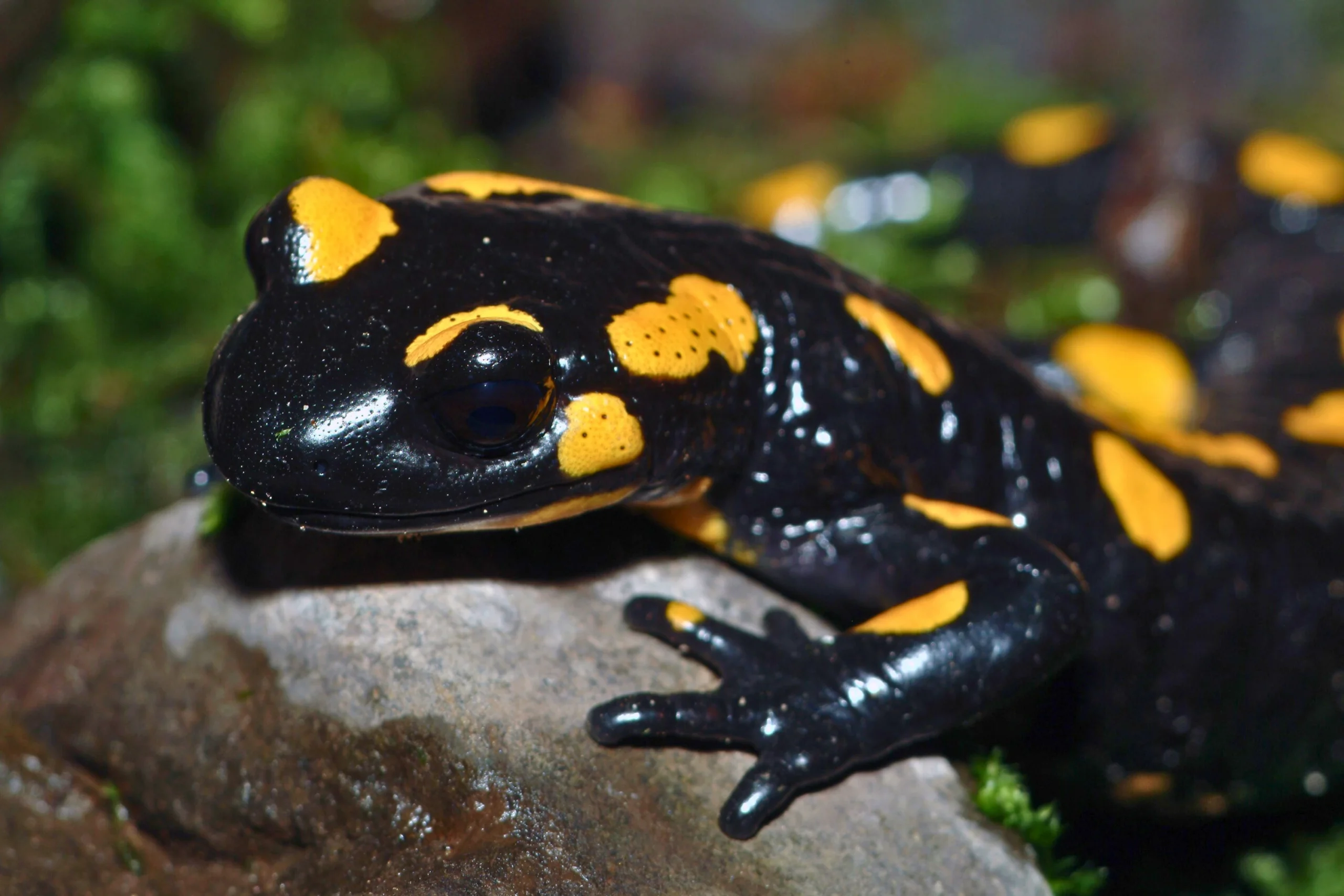
Amphibians—frogs, newts, salamanders, and their relatives—play an essential role in natural ecosystems. They are also important to people in several ways. Frogs, for example, are valuable allies in controlling insect pests in agriculture. Many species consume large numbers of mosquitoes, which has direct benefits for humans. This not only means fewer biting insects to deal with, but also has public health importance, as mosquitoes can spread diseases. Other amphibians also feed on mosquito larvae.
If we compare major animal groups such as mammals, birds, reptiles, amphibians, and fish, amphibians have the highest proportion of threatened species. According to the International Union for Conservation of Nature (IUCN) Red List, 44% of amphibian species are considered threatened to some degree. The same figure is 27% for mammals, 26% for freshwater fish, 21% for reptiles, and 11.5% for birds.
Amphibians face many threats to their survival. The most serious is the loss of natural habitats, but global climate change, environmental pollution—especially water pollution—and invasive species introduced by humans also have a strong impact. In many respects, amphibians are more sensitive to these changes than birds or mammals.
Certain species of chytrid fungi (Chytridiomycota) are also a major threat. These fungi act as aggressive parasites and infect amphibians. Their global spread is clearly linked to human activity, as they were carried around the world through the transport of African clawed frogs previously used in laboratories, as well as through the trade in exotic pet amphibians. In addition, environmental stress caused by human activity can reduce amphibians’ resistance to these infections.
It is no coincidence that we are highlighting amphibians and the threats they face at this time. The topic is especially timely for two reasons. First, the European Association of Zoos and Aquaria (EAZA) has launched a nature conservation campaign called “Wetlands for Life,” focusing on wetland habitats, and our Zoo is also taking part. In connection with this, we regularly publish articles and educational content on our website. Amphibians are closely linked to wetland habitats and form an important part of these ecosystems. The topic is also relevant because March 20 is World Frog (and Amphibian) Day, and World Water Day is observed on March 22.
At our Zoo, not only mammals, birds, and reptiles have a long tradition of being kept and presented, but amphibians as well. This has been especially true since 1912, when our then director, Adolf Lendl—who also led the professional work during the Zoo’s reconstruction between 1909 and 1912—defined a collection concept aimed at presenting as wide a range of biodiversity as possible to visitors. Amphibians were an integral part of this concept.
Today, visitors can see several amphibian species at the Zoo. Next to the entrance of the House of Waterside Life, an outdoor exhibit presents native frog species. Inside the building, visitors can also observe fire salamanders, another native species, in a well-designed aquaterrarium. On level -1 of the Magic Mountain, in the exhibition area called the Primeval Sea, visitors can encounter not only marine but also freshwater species, including exotic amphibians. These include the lesser siren, the Asturian fire salamander, the Vietnamese crocodile newt, the Himalayan crocodile newt, and the golden-stripe newt. In the Australia House, visitors can also see the giant tree frog.