
As part of the Zoo’s anniversary commemorative year, we regularly share interesting stories from our institution’s 160-year history. This time, we look at how the half-hectare area now occupied by the Capital Circus of Budapest became separated from the Zoo.
Our Zoo opened its gates to the public on 9 August 1866, which means that this year we celebrate the 160th anniversary of its opening. Although the actual anniversary is still three months away, the topic is already timely. This is especially true because we have designated the entire year of 2026 as a commemorative anniversary year.
As part of the anniversary celebrations, we regularly publish articles on our website about the Zoo’s past. We have already written about what the winter months used to be like at the Zoo, reviewed how educational signs and displays have evolved over the decades, explored what old maps reveal about the Zoo’s history, and summarized decades of our rabbit conservation work. This time, we examine how half a hectare of Zoo land became part of what is now the Capital Circus of Budapest.
It is well known that the Zoo’s grounds were reduced several times during its history. These reductions all took place in earlier periods, before the end of the 1950s, when not all decision-makers recognized the conservation, educational, and cultural importance of zoos. In many other places, this recognition came much earlier. As a result, throughout the world—both in the West and the East—the usual practice was that once a zoo was established, its grounds were gradually expanded. In Budapest, however, it was only in the 21st century that progress was made in this regard, at least to the extent that the Zoo received compensation for areas it had lost in the past. Even today, however, the Zoo’s grounds are no larger than the area originally designated for its establishment in 1864.
One of the areas lost in the past is the nearly half-hectare plot now occupied by the Capital Circus of Budapest. From 1864 until the nationalizations that followed the Second World War, in 1947, this land belonged to the Zoo. Circus operators first appeared on Zoo grounds because, during the 19th century, the Zoo leased certain areas to circus companies. Different companies rented the space at different times and set up their circus tents on the leased land.
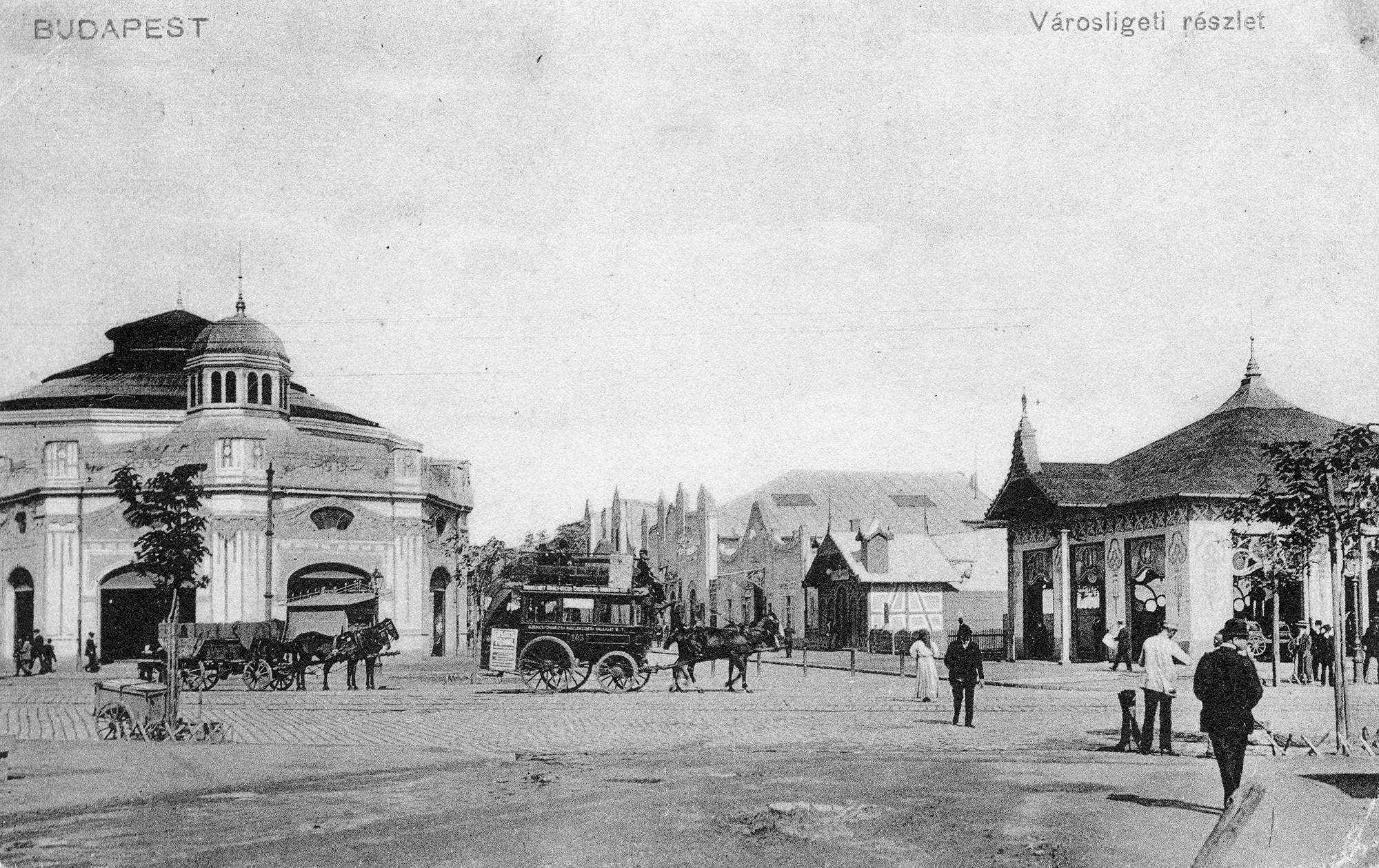
One of these tenants, the German-Dutch circus director Ede Wulff, frequently complained about the difficulties associated with temporary circus facilities. He therefore proposed building a permanent circus structure with a metal framework instead of erecting a tent on the land leased from the Zoo. The agreement was signed at the beginning of 1889 between the Zoo, as the landowner, and the circus director leasing the site. The new building hosted its ceremonial opening performance on 27 June of the same year. Wulff’s circus operated, with occasional interruptions, for about a decade. Later, new tenants arrived, including the Russian-born Beketow circus dynasty from 1904 onward. First Mátyás Beketow, and later his son Sándor, held the circus lease.
Meanwhile, in connection with land reorganization related to the creation of the “outer amusement grounds,” the circus site was reassigned in 1907 to a location 80 metres away from its previous position. As a result, the circus building itself was relocated, while the lease arrangement remained unchanged. In other words, this part of the land still belonged to the Zoo, but the circus operator paid rent for its use to the Zoo. From 1935 onward, another tenant, György Fényes, operated the circus. He was the first to use the name “Capital Grand Circus” for his circus.
Following the Second World War, the nationalization of the circus company in 1949, and the establishment of the state-run Capital Circus of Budapest as we know it today, it was gradually “forgotten” that the land actually belonged to the Zoo. As a result, the Zoo’s grounds were reduced by approximately half a hectare, and it no longer received any rental income from the site. The metal-framed circus building originally commissioned by Ede Wulff on Zoo property was itself owned by the Zoo from 1895 onward under the terms of the contract, not only the land on which it stood. This building remained in use until 1966, despite its relocation in 1907 and several later modifications. It was then demolished, and a new circus building was constructed on the same site by 1971 based on the designs of István Fazekas and Ferenc Barbier.
Interestingly, the Capital Circus of Budapest identifies 1889 as the year of its foundation. Although the institution in its current form was established in 1949, it regards the Fényes, Beketow, and even the Wulff circuses as its predecessors because all of them operated in the circus building constructed in 1889 and demolished in 1966.