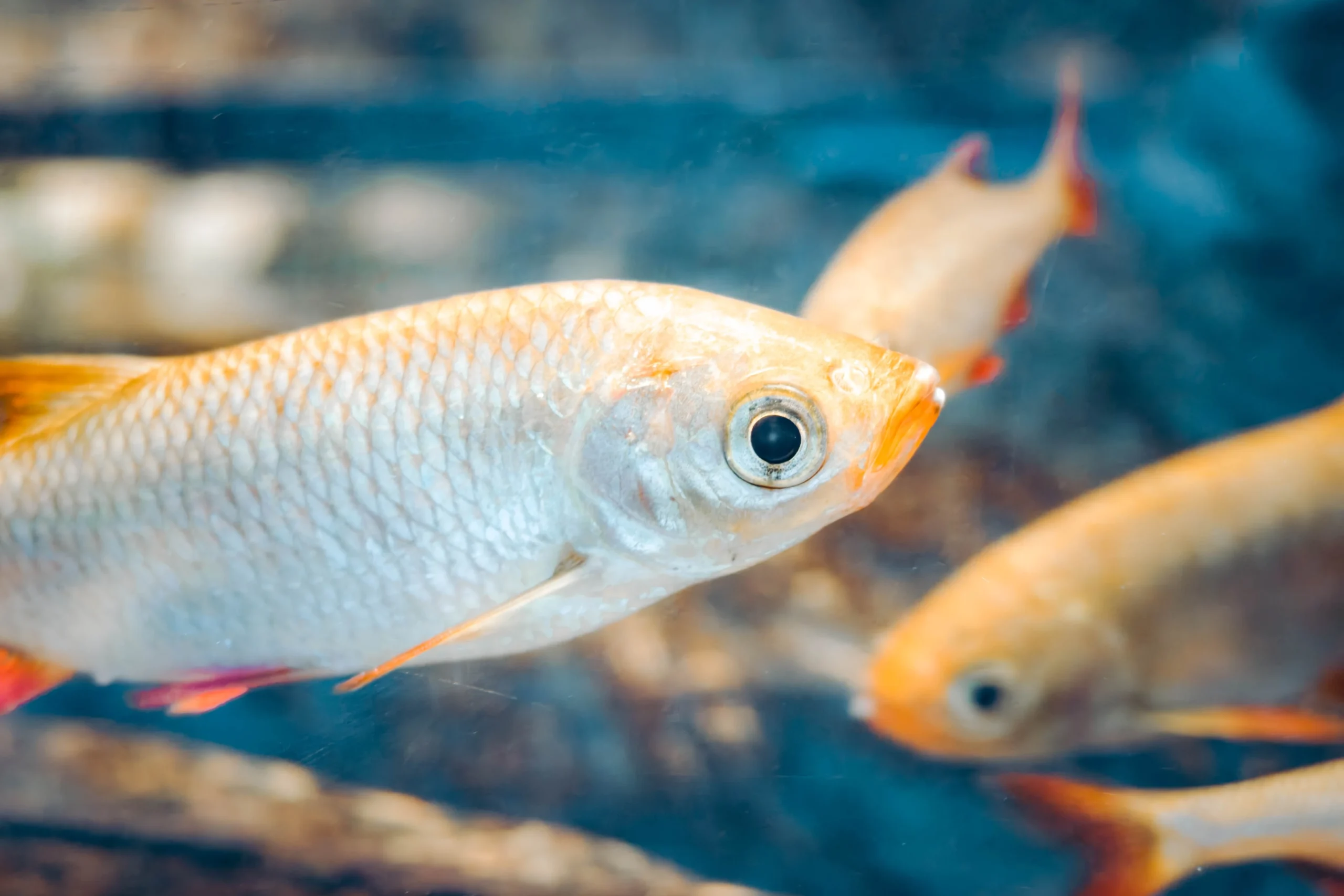
As part of the “Wetlands for Life” nature conservation campaign launched by the European Association of Zoos and Aquaria (EAZA), which we have also joined, we regularly share interesting facts about wetlands and aquatic life. This time, we focus on how fish sense the world around them.
We humans collect most information about our environment through sight, and many fish also have very good vision. Their field of view is usually wider than ours, because they need to see dangers coming from all directions. This is why most fish have round, bulging eyes. In technology, very wide-angle lenses are even called “fish-eye lenses.” Some fish can also see colors that humans cannot, such as infrared (IR) and ultraviolet (UV) light.
Most fish have a special sense organ called the lateral line, which runs along both sides of their body. It is located under the scales, but you can often see its line on the surface of the body. This organ works a bit like the sense of touch. It can detect water movement, small changes in pressure, and vibrations in the water. With this, fish can swim more efficiently in currents, stay together in a group, and notice any movement around them. It is sometimes described as a kind of “distance touch.”
Close-range touch is also common, especially in fish that stir up the bottom while feeding, making it hard to see. These fish often use barbels (whisker-like organs) to feel the bottom and find food. Many freshwater fish have these, including catfish, carp, and sturgeon.
Many fish also have a strong sense of smell. Even more interesting is that some fish can sense electricity. There are different ways they do this. Some fish can detect the weak electrical signals made by the muscles of their prey, which helps them hunt. Other species create an electric field around their body and sense changes in this field caused by nearby objects. In our zoo, you can see several fish that use their own electric field to understand their surroundings, such as the elephantnose fish in the Magic Mountain exhibit and the electric eel in the Aquarium under the Palm House.