
The horses transported last year from the Pentezug Wild Horse Reserve of Hortobágy National Park to Kazakhstan were released into the wild at the end of May in the Altyn Dala region. After a successful adaptation period, the horses are healthy, in good condition, and have adjusted well to their new habitat.
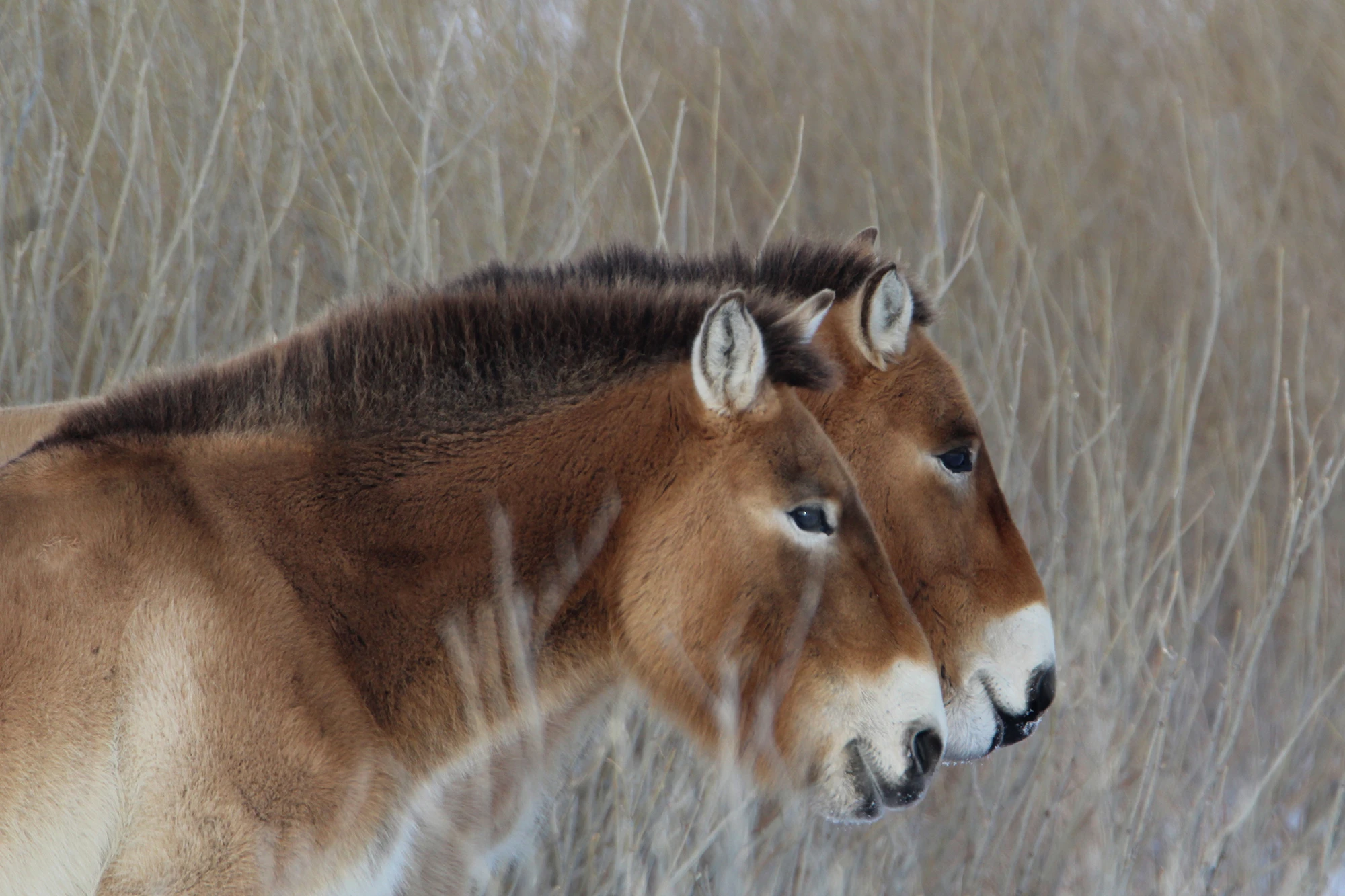
Przewalski’s Horses Have Successfully Adapted to Their New Habitat
The Hortobágy National Park Directorate plays a key role in the reintroduction programme and has been involved in the conservation of the world’s last remaining wild horse species for nearly three decades. The largest population of Przewalski’s horses kept under semi-wild conditions in Europe lives in Pentezug, within Hortobágy National Park. Animals raised in this near-natural environment are particularly well suited for reintroduction into the wild, as they have lived under conditions from birth that help preserve their natural behaviour and adaptability.
The professional contribution of Budapest Zoo and Botanical Garden has also been important to the success of the programme. During last year’s capture, health examinations and transport operations, the Zoo’s specialists helped ensure the animals’ safety and welfare, and also took part in preparations for the reintroduction. Budapest Zoo and Botanical Garden has been an active participant in the international conservation programme for Przewalski’s horses for decades and has cooperated with the Hortobágy wild horse programme since its inception.
The five horses that have now been released—one stallion from Wildnispark Zürich in Switzerland and four mares from Hortobágy—arrived in Kazakhstan in June 2025. The animals spent a year in a reintroduction centre preparing for life in the wild, where specialists continuously monitored their health and behaviour. Observations showed that the horses successfully endured the extremely cold winter, found food and water sources on their own, and adapted quickly to the steppe environment.
According to conservation experts, this latest release provides further evidence that the conditions of the Hortobágy Plain offer an excellent foundation for international reintroduction efforts for the species. The long-term goal of the Kazakhstan initiative is to establish a self-sustaining population of Przewalski’s horses on the Turgai Steppe, where the species disappeared more than two centuries ago.
The programme is led by Prague Zoo and carried out in cooperation with several European and Kazakh conservation organisations, including the Forestry and Wildlife Committee of the Republic of Kazakhstan, the Association for the Conservation of Biodiversity of Kazakhstan (ACBK), the Frankfurt Zoological Society (FZS), Nuremberg Zoo and Tierpark Berlin. The partnership aims to have 40–45 Przewalski’s horses living freely in Central Kazakhstan by 2029, contributing to the restoration of the steppe ecosystem and the conservation of the region’s biodiversity.